Below is a practical, internal-method explanation of how to train sinking (沈), using internal energy (內勁), and moving as one unit with your partner so that you can draw or pull them in multiple directions—without obvious force.
1. First Principle: Sink Before You Move (先沈後動)
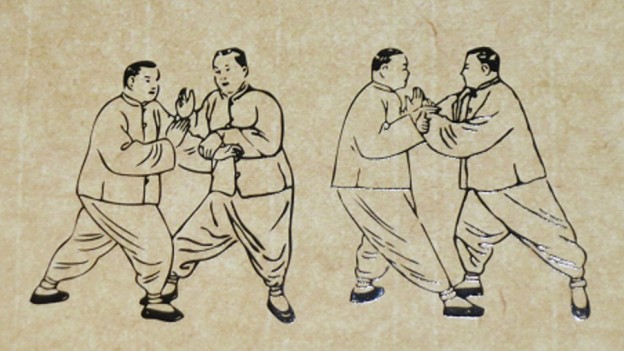
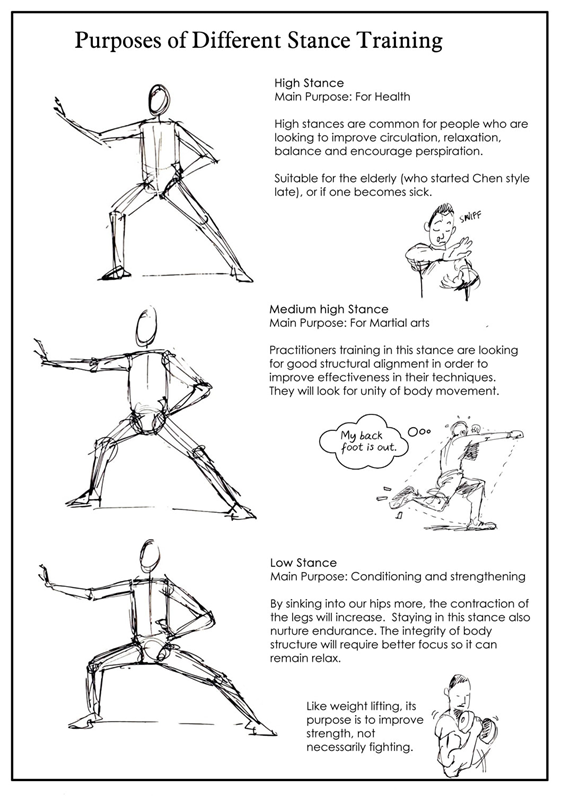
Sinking is not pushing down.
It is allowing gravity to pass through you into the ground.
How to practice
Stand upright
Release shoulders, chest, and lower back
Let weight settle into:
feet
kua (hip folds)
dantian
Internal cue
“The body drops inside, but the spine grows longer.”
When sinking is correct:
Legs feel fuller, not heavier
Upper body feels buoyant
Partner feels “drawn in” when touching you
2. Internal Energy Comes from Vertical Release, Not Horizontal Force


Internal energy (內勁) appears when:
Vertical sinking
Spiral rotation
Whole-body continuity
Think of it as a coiled spring:
Sink = load the spring
Rotate = redirect the spring
Release = partner moves
Drill (solo)
Sink slightly
Rotate dantian a few degrees
Let arms move because the torso moved
If arms move first → it’s external force
If body turns and arms follow → internal energy
3. Connect to Partner: Two Bodies, One Center
Before pulling a partner, connect structure to structure.
Key ideas
Touch lightly
No gripping
Maintain roundness (peng 勁)
Internal cue
“My center touches your center through the contact point.”
This creates shared balance:
When you move, they move
When they resist, they sink into you
4. Pulling Is Done by Emptying, Not Dragging (引不是拉)

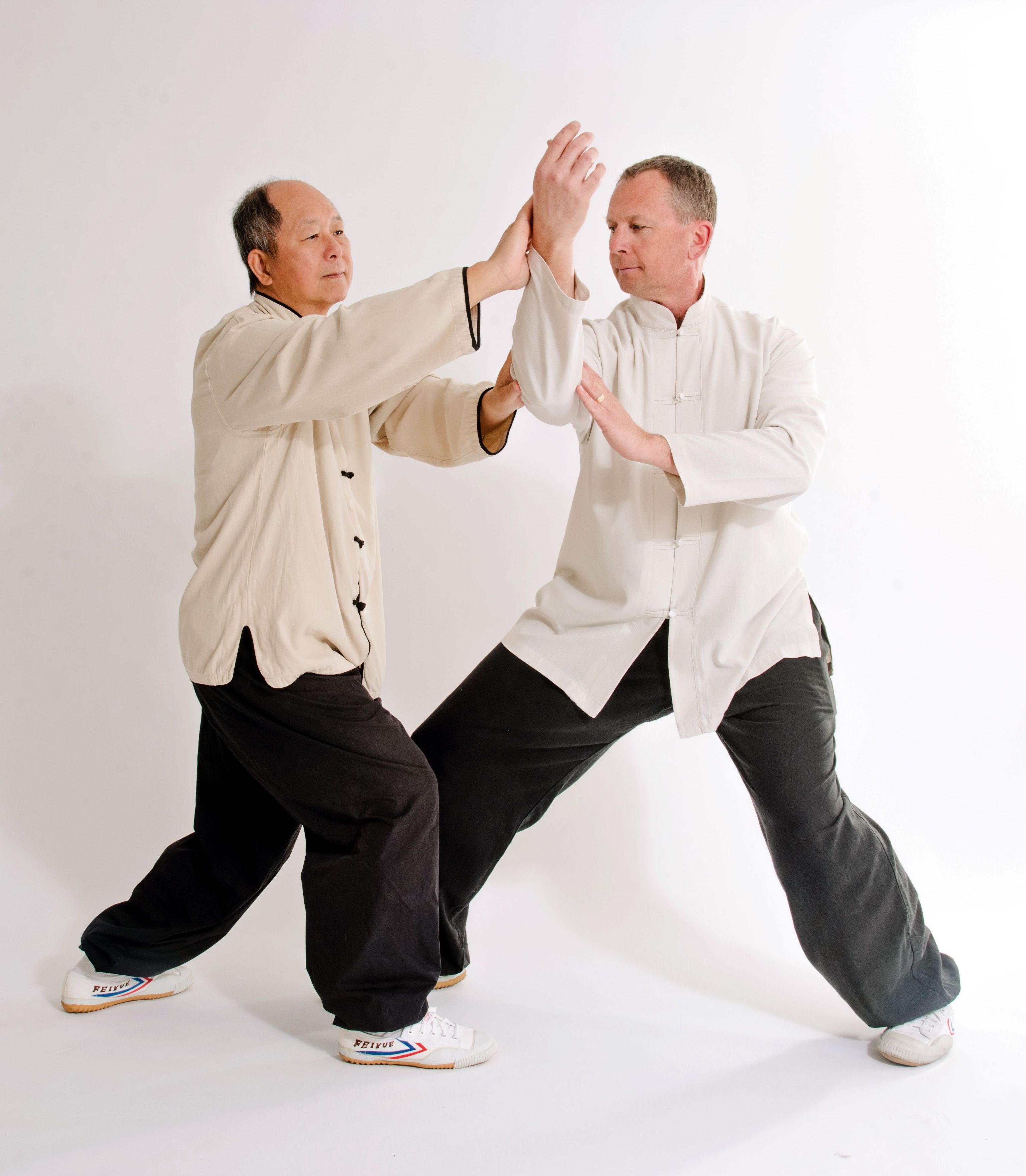
To pull a partner:
You must first empty your own space
Their force fills what you vacate
Basic method
Sink
Slightly rotate dantian
Withdraw internally, not backward
The partner feels:
A hole
A loss of support
An irresistible draw
5. Pulling in Different Directions (八方皆引)
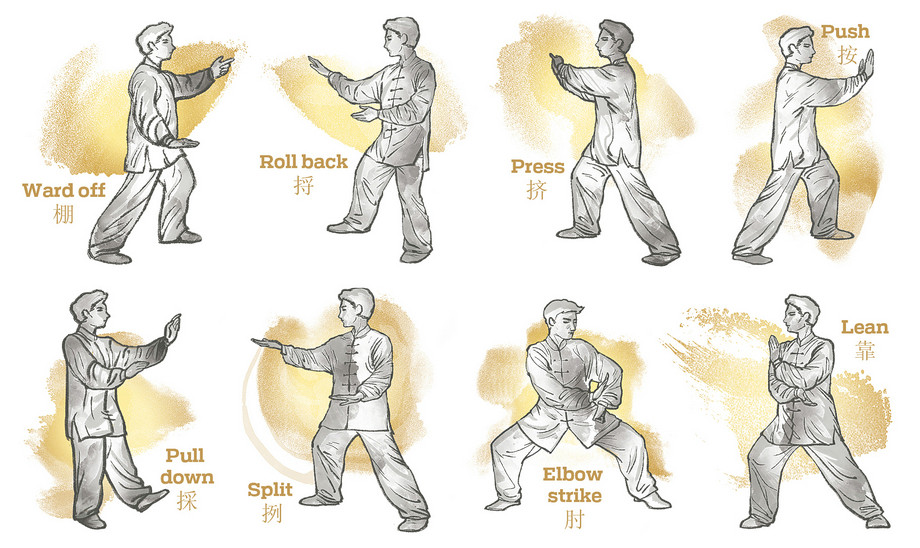

You can pull a partner in many directions using the same principle.
Directional examples
Downward-diagonal
Sink + slight kua fold
Partner feels “falling forward”
Upward-diagonal
Sink → then open spine
Partner rises, loses root
Sideward
Rotate dantian
Keep feet still
Partner moves sideways without push
Backward
Empty chest and front kua
Partner steps into emptiness
👉 Direction comes from dantian rotation + structural opening, not arm direction.
6. Move as One Unit: No Separate Parts

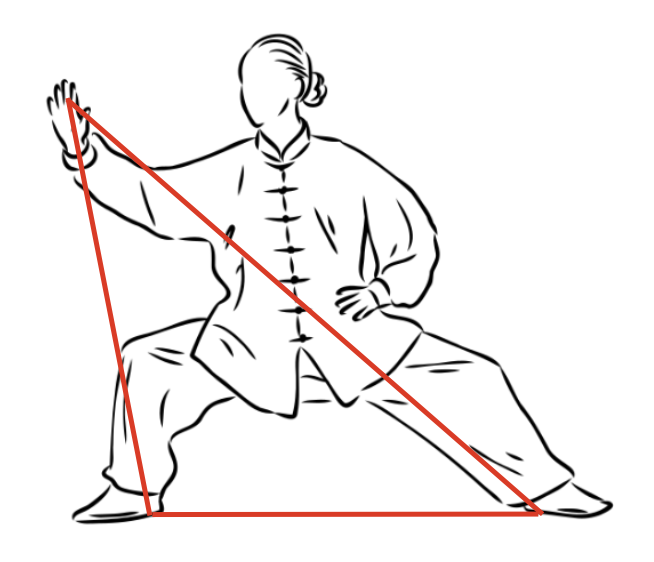
To move as one unit:
Feet, kua, spine, arms move together
No part arrives earlier or later
Internal checklist
Feet rooted?
Kua open?
Spine suspended?
Arms relaxed?
If one part stiffens:
Connection breaks
Partner feels push instead of pull
7. Partner Drill: “Shared Falling”
Drill steps
Light contact
Both partners sink
One partner slowly empties one direction
The other follows involuntarily
Rule
If partner must step → you did it right
If partner resists → you forced
Key Internal Summary
Sink first → gravity is your power
Rotate dantian → direction changes
Empty space → partner fills it
Whole body moves → no visible effort
Partner feels led, not pulled
Classical reminder
「彼不動,我不動;彼微動,我先動。」
When he does not move, I do not move.
When he moves slightly, I move first.
.Great—here is a clear, progressive training set you can use to actually feel sinking, internal energy, and whole-body partner movement.
Practice them slowly, with light contact. Quality matters far more than power.
A. Solo Foundation (so your body can lead another body)
Drill 1: Vertical Sinking with Buoyancy (沈而不塌)

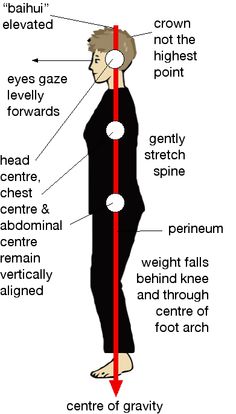
Purpose: Build true sinking without collapse.
How
Stand upright, feet shoulder-width
Release chest, shoulders, lower back
Let weight settle into feet and kua
Imagine:
weight dropping down
spine gently lifting up
Check
Legs feel full
Upper body feels light
Breath deepens naturally
If you feel heavy → too much force
If you feel floating without root → not sunk
Drill 2: Dantian Leads, Limbs Follow (丹田動,四肢隨)

Purpose: Remove arm-driven movement.
How
Sink slightly
Rotate dantian 5–10°
Let arms move only because torso moved
Stop rotation → arms stop
Key rule
If arms can move without the body → it’s not internal.
This is the engine for pulling partners later.
B. Partner Sensitivity (建立「共用中心」)
Drill 3: Shared Weight Test (共沈)


Purpose: Learn to share balance before moving.
How
Light wrist or forearm contact
Both partners sink together
No pushing, no pulling
Feel how weight changes travel through contact
Success sign
When one sinks, the other feels it
No muscular resistance
If pressure increases → stop and release more.
Drill 4: Internal Emptying (引而不拉)
Purpose: Learn pulling without dragging.
How
Maintain peng (rounded structure)
Sink slightly
Empty your chest or kua internally
Do NOT step back
Result
Partner steps in unintentionally
They feel “nothing to lean on”
Rule
Pulling happens because you disappeared, not because you pulled.
C. Directional Pulling (八方皆通)
Drill 5: Diagonal Downward Draw

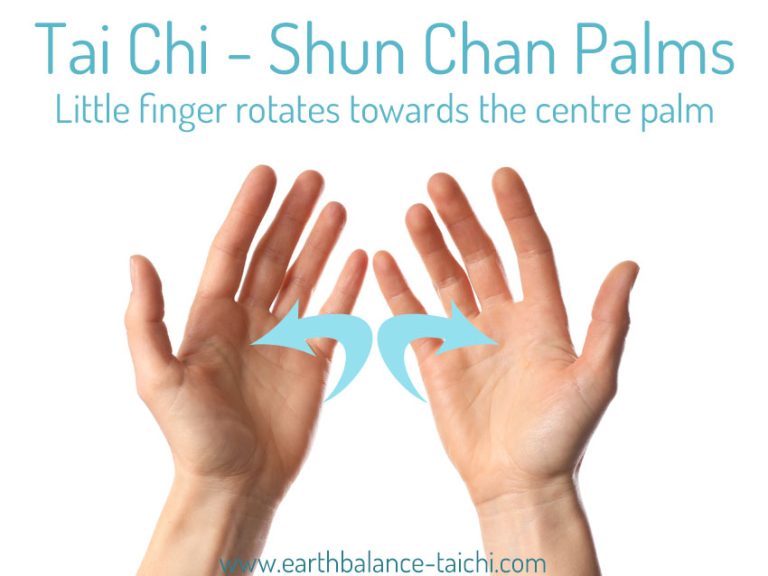
Method
Sink
Slightly fold front kua
Rotate dantian diagonally
Effect
Partner falls forward-down
Feels like stepping into a hole
Never push downward with arms.
Drill 6: Side Pull via Rotation
Method
Feet stay rooted
Rotate dantian horizontally
Arms remain round and soft
Effect
Partner moves sideways
Often shocked: “I wasn’t pushed”
This proves the power is rotational, not linear.
Drill 7: Upward-Diagonal Disruption (升中有沈)
Method
Sink first
Then subtly open spine
Maintain foot connection
Effect
Partner rises
Loses root
Often steps backward
Upward force works only if sinking happens first.
D. Moving as One Unit (整體勁)
Drill 8: One-Wave Movement
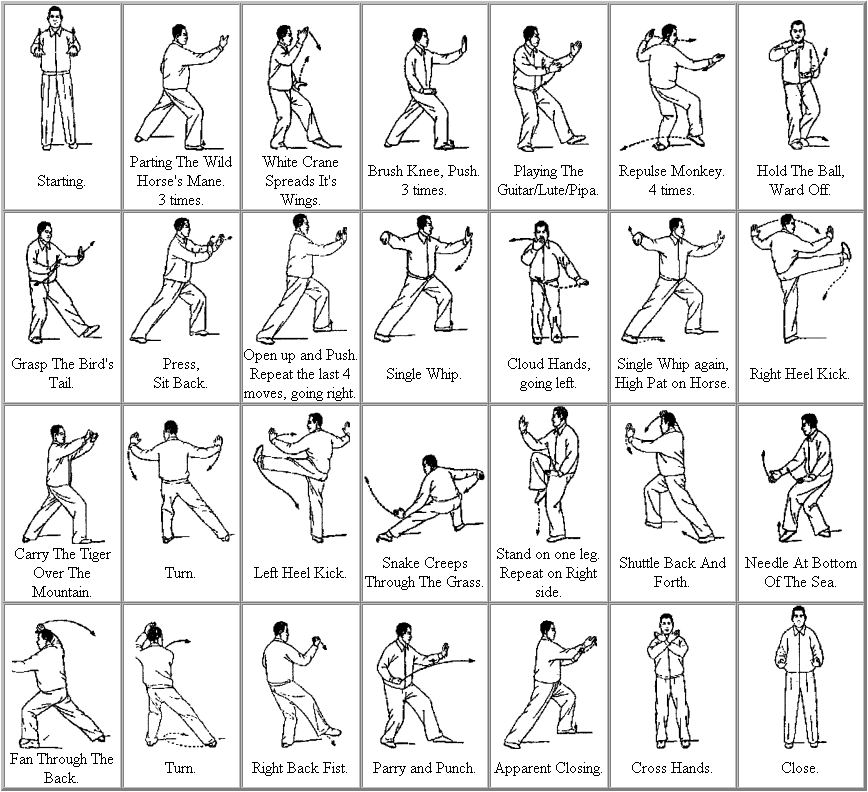
Purpose: Remove timing gaps.
How
Initiate from feet
Pass through kua
Express through arms
Arrive everywhere at once
Test
Ask your partner:
“Did you feel where it started?”
If they can point to hands → not unified
If they say “everywhere” → correct
Common Mistakes (Very Important)
❌ Pulling with arms
❌ Leaning backward
❌ Using speed to hide force
❌ Separating sinking and rotation
✔ Sink first
✔ Rotate from center
✔ Empty space
✔ Let partner move themselves
One-Sentence Training Formula
Sink to load → rotate to lead → empty to draw → move as one unit.
沒有留言:
張貼留言