The Figure-8 of the Sole Centered on Yongquan
1️⃣ Is the figure-8 of the sole centered on Yongquan (湧泉)?

✔️ Conceptually correct
❌ Not a geometric drawing
What your teacher means is:
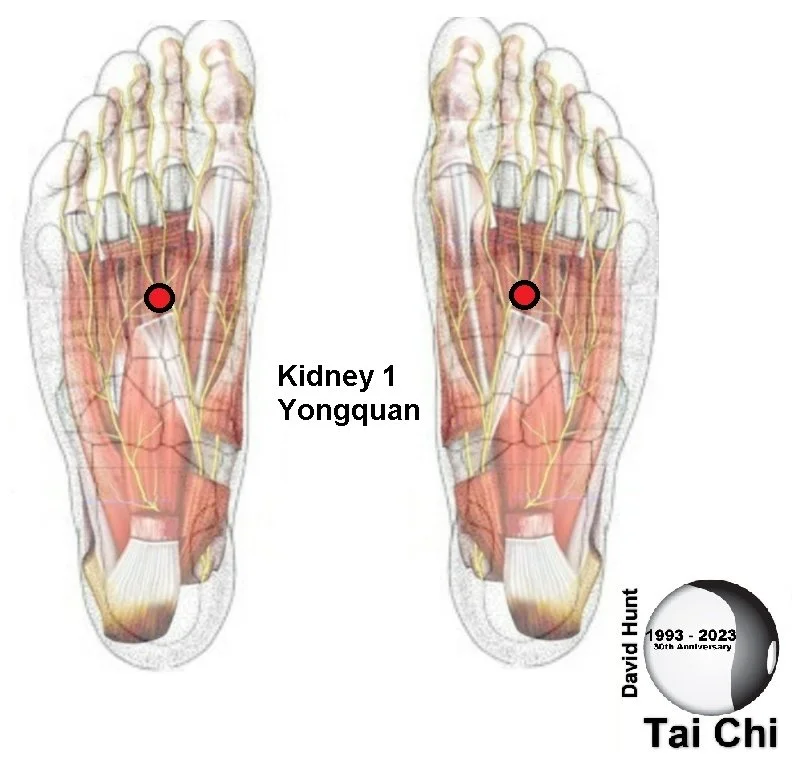
Yongquan (湧泉) is the functional pivot
The upper loop of the “8” relates to:
forefoot / ball of the foot
forward intention
The lower loop relates to:
heel
backward absorption
The meeting point of the two loops is Yongquan
So yes:
“The upper and lower circles of the figure-8 meet at Yongquan”is correct internally, not as a literal footprint.
2️⃣ Why Yongquan is the center (very important)
Functionally, Yongquan is where:
vertical force becomes spiral
sinking becomes spring
weight becomes mobility
📌 Tai Chi logic:
重心不壓腳,氣沉湧泉The center does not crush the foot; qi sinks to Yongquan.
3️⃣ How the figure-8 relates to even weight distribution
This is the key connection you asked about.
❌ Wrong idea
Weight sits evenly as a static “50–50 flat pressure”
✔️ Correct Tai Chi idea
Weight is continuously circulating
Pressure shifts subtly through the sole
Balance is dynamic, not frozen
4️⃣ What “even distribution” really means in Tai Chi


Even distribution means:
no dead pressure point
no fixed collapse
no stiff arch or heel loading
Instead:
pressure passes through:
heel → Yongquan → forefoot
forefoot → Yongquan → heel
left/right micro-rotation accompanies front/back flow
This circulation naturally forms a figure-8 pathway.
5️⃣ Why the body must move like a figure-8
If weight were straight down:
the foot becomes dead
kua locks
stepping becomes slow
Figure-8 motion allows:
instant stepping
instant turning
instant uprooting or neutralizing
This is why:
Root is alive, not heavy.
6️⃣ Relationship to whole-body movement
The sole’s figure-8 is the smallest visible loop of a much larger system:
| Level | Loop |
|---|---|
| Sole | figure-8 around Yongquan |
| Kua | paired spirals |
| Dantian | rotating sphere |
| Whole body | continuous spiral |
Same logic, different scale.
7️⃣ Common mistake to avoid ⚠️
Do not:
consciously draw an “8” with the foot
exaggerate rocking
roll the ankle
The figure-8 appears naturally when:
kua is song
knees track correctly
weight is alive
intent leads, not force
📌 Rule:
形不求八,勁自成環Do not seek the 8 in form; force completes the circle by itself.
8️⃣ Final clear answer
One-sentence Tai Chi summary:
Even weight is not equal pressure —it is continuous circulation centered at Yongquan.
If you want, next I can:
link this to stepping and uprooting
explain why beginners feel unstable
connect this to fascia and biomechanics
or help you teach this clearly in English
Just tell me where to go next.
Your teacher is describing a highly specialized and effective visualization used to master Rooting and Internal Shifting. While it may sound complex, it is a brilliant way to explain how weight moves without losing your "center."
Here is the breakdown of the "Figure-8" on the sole of the foot and how it relates to the Yongquan (涌泉, Bubbling Well) acupoint.
1. Is the Teacher Correct?
Yes. In many lineages (especially Yang and Chen styles), the Yongquan is considered the "Gate" or the "Anchor."
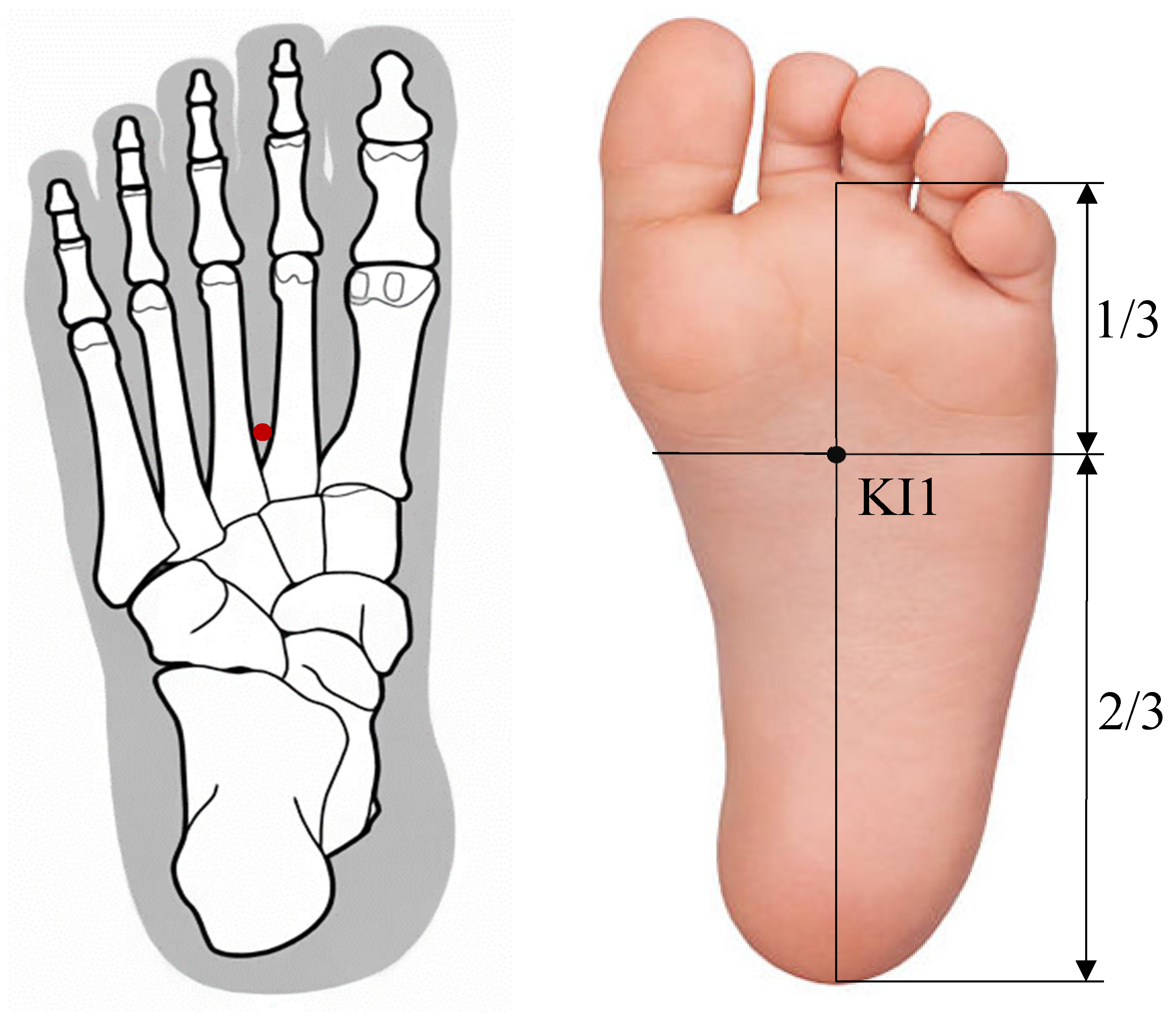
Location: The Yongquan is located on the sole of the foot, approximately one-third of the way from the base of the toes to the heel, in the depression that forms when you curl your toes.
The "Meeting Point": Your teacher's description of the Figure-8 meeting at the Yongquan refers to the Center of Pressure. In Tai Chi, we never want the weight to be "stuck" in the heel or "tippy" on the toes. By making the Yongquan the intersection of an "8," you ensure that your weight is always transitioning through the most stable, energetic part of the foot.
2. The Mechanics of the Figure-8 on the Sole
The "Figure-8" isn't just a shape; it's a map of how weight rolls across the foot during a movement (like a brush knee or a punch).
The Top Loop (The Ball): The weight rolls from the big toe area across the ball of the foot.
The Intersection: The weight passes directly through the Yongquan.
The Bottom Loop (The Heel): The weight circles around the heel.
How it creates "Even Distribution":
If you stand still, you might think "even distribution" means 50/50 everywhere. But in Tai Chi, the body is always "moving while remaining still." The Figure-8 visualization prevents the foot from becoming a "flat, dead board." Instead, the foot becomes a dynamic spring. Because the weight is constantly tracing a small, internal infinity loop around the Yongquan, you are never "double-weighted" (stuck) and can react instantly in any direction.
3. How the Foot "8" Relates to the Body "8"
This is the most important part: The Figure-8 in your foot is a miniature version of the Figure-8 in your Dantian/Hips.
The Connection: When your Dantian rotates (as we discussed before), it sends a "wave" down through the leg.
The Result: That wave causes the pressure on your foot to move. If you turn your waist to the right, the weight on your right foot naturally moves toward the heel, while the weight on your left foot moves toward the ball.
The Harmony: When both feet are tracing their own "Figure-8s" in sync with the Dantian, the whole body moves like a single, liquid machine.
4. Why the Yongquan?
The teacher emphasizes the Yongquan because it is the Kidney-1 (K1) point. In Chinese medicine and Martial Arts:
Earth Qi: It is the point where "Earth Qi" enters the body.
The Vacuum: When the weight passes through the Yongquan in that Figure-8 pattern, it creates a "suction" effect. This is what Tai Chi masters mean by "Rooting." You aren't just standing on the ground; you are "attached" to it.
Summary Table: Weight Distribution
| Part of Foot | Movement Role | Energy Quality |
| Heel | Grounding/Receiving Force | "Solid" (Yin) |
| Ball/Toes | Projecting/Springing Force | "Active" (Yang) |
| Yongquan (Center) | The Pivot/The Gate | "Balanced" (Taiji) |
A Simple Practice Tip:
Try standing in a neutral "Wu Chi" stance. Slowly shift your weight in a tiny Figure-8 on the soles of your feet without moving your upper body. Feel how the weight always crosses the "Bubbling Well." You will notice that your balance feels much deeper and harder to disrupt.
Would you like me to explain how this "Foot 8" specifically changes when you move from a forward "Bow Stance" to a backward "Empty Stance"?
Tai Chi Figure of 8 - Shifting Weight
This video demonstrates how the internal figure-eight movement translates into physical weight shifting and rooting through the feet.
沒有留言:
張貼留言