Water Flowing between the Two Kuas (兩胯)
This is a very refined question, and the phrase 「流水兩胯間」 actually helps resolve the apparent contradiction between the “two cylinders” and “one big cylinder” models.
Let’s clarify it step by step—keeping the key Chinese terms.
1️⃣ What 「流水兩胯間」 really means
The emphasis is not on “water,” but on:
👉 “flowing between the two kua (兩胯)”
So:
Not inside each leg separately
Not isolated left/right mechanics
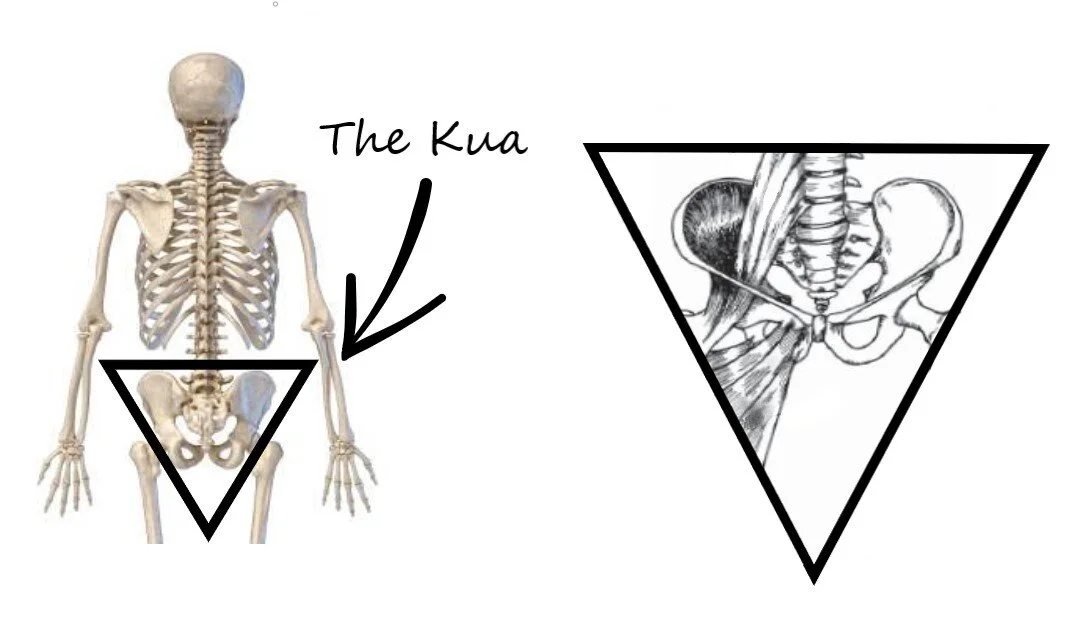
But a continuous flow through the central pelvic region (丹田 / 胯區)
This aligns with:
「其根在腳,主宰於腰」
「氣如流水,綿綿不斷」
👉 The essence is:
continuity, connectivity, and regulation through the center
2️⃣ Comparing the two models
🅰️ Model 1 — “Two Cylinders” (兩腿各一圓柱)
Each leg acts like an independent support cylinder.
✔ Useful for:
Understanding 虛實 (empty/full)
Weight shifting (70/30, 100%)
❌ Limitation:
Encourages left-right switching
Breaks continuity at the 胯 / 丹田
👉 Result:
Movement becomes segmented
Hard to achieve 整體勁 (whole-body power)
🅱️ Model 2 — “One Big Cylinder” (整體一圓柱)
The whole body acts as one integrated column.
✔ Strength:
Emphasizes central control (丹田主宰)
Supports 整體連動
❌ Risk:
If misunderstood:
Movement becomes “block-like”
Loss of 虛實變化
3️⃣ The more accurate model (key insight)
👉 Neither model alone is complete.
The best interpretation is:
🔥 “One Body, Two Gates” (一體兩閥 / 兩閥調水)
Core idea
The body = one integrated system (整體 / 丹田為核心)
The legs = two регулируators (閥門) controlling flow
Water analogy (refined)
Not:
❌ two separate cylinders
❌ one rigid cylinder
But:
👉 one fluid system, regulated between the two kua (兩胯間調節)
Mapping to body
| Structure | Function |
|---|---|
| 丹田 / 胯區 | central pressure + flow hub |
| 左腿 | regulating gate |
| 右腿 | regulating gate |
4️⃣ How it explains movement in all directions
▶ Forward (前進)
Rear leg = opens (發 / 開)
Front leg = receives (收 / 合)
👉 Flow:
rear → 丹田 → front
But:
✔ center stays active
✔ not “pushing forward”
▶ Backward (後退)
Front leg releases
Rear leg absorbs
👉 Flow reverses but still passes through center
▶ Sideways (橫移)
One kua opens (開)
One kua closes (合)
👉 Flow shifts laterally through 丹田, not just leg-to-leg
5️⃣ Why masters say 「流水兩胯間」
Because:
👉 The key is NOT where force starts or ends
👉 The key is how it is regulated through the kua
So:
Legs do not generate independently
They modulate a central flow
6️⃣ Biomechanics interpretation
This matches modern science very well:
✔ Intra-abdominal pressure (丹田內壓)
Core behaves like a fluid pressure system
Movement = pressure redistribution
✔ Fascial continuity (筋膜連續)
Left/right legs are connected through:
pelvis
deep front line
spiral lines
👉 No true separation
✔ Ground reaction force (GRF)
Not:
❌ one leg pushes
But:
👉 whole-body pressure reorganizes through both legs
7️⃣ Which model explains movement best?
Final answer:
👉
The “two-cylinder” model is useful for beginners (虛實分明).
👉
The “one big cylinder” model is closer, but incomplete.
✅ The most accurate is:
🔥 **“One integrated body with two регулируating gates”
(一體兩閥,流水兩胯間)**
8️⃣ One sentence summary (for teaching)
👉
“The body is not two cylinders, nor a rigid single cylinder, but a unified fluid system where movement is regulated between the two kua (流水兩胯間).”
9️⃣ Practical push-hands implication
When done correctly:
You don’t push from one leg
You don’t transfer weight mechanically
👉 You redistribute internal pressure through the kua
Result:
No clear direction
Continuous force
Opponent feels “floating / being carried”
Excellent—let’s make this into a clear A/B partner diagram system for your teaching and judging use.
I’ll present it as a “One Body–Two Gates (一體兩閥)” push-hands diagram series, directly usable in manuals or slides.
🥋 Core Model Diagram
一體兩閥 · 流水兩胯間
One Body–Two Gates Model


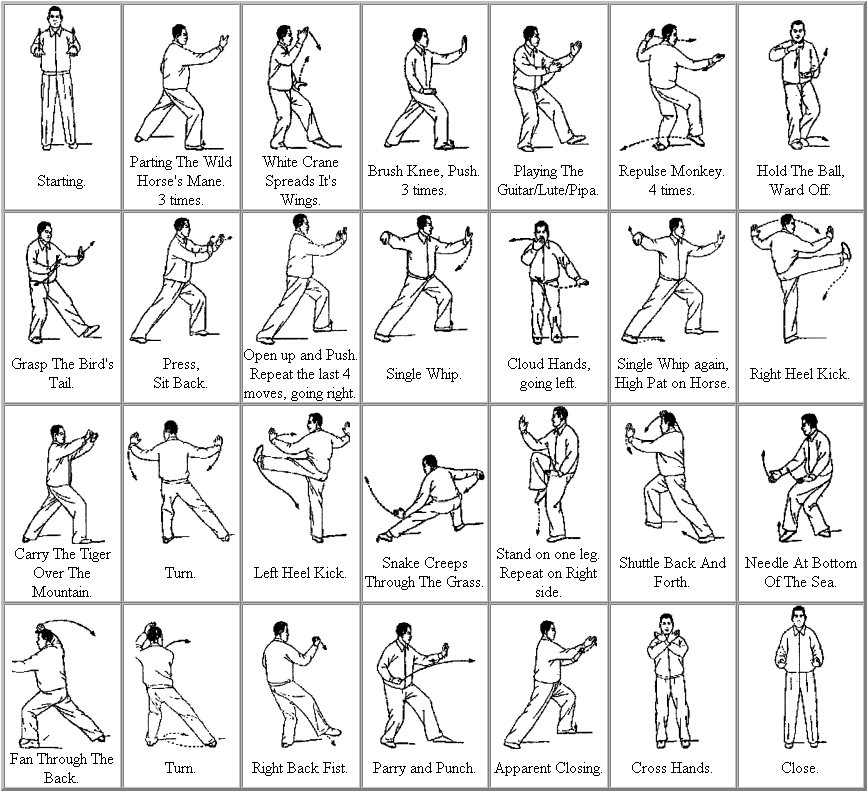
🔑 Visual Interpretation
Center = 丹田 (Dantian pressure hub)
Left / Right legs = 兩閥 (two регулируating gates)
Arrows = flow between the two kua (兩胯間流動)
👉 No straight push arrows
👉 Only redistribution through center
🥋 Drill Diagram 1 — Forward (前進)
A attacks forward, B receives


🔄 Flow (A)
Rear leg = opens (開閥)
Front leg = receives (收閥)
丹田 = transfer hub
👉 Flow:
rear → 丹田 → front → contact
🔄 B response
Do NOT resist
Redirect through own 丹田
🎯 Key Point
👉 Not pushing forward
👉 But pressure re-routed forward
🥋 Drill Diagram 2 — Backward (後退)


🔄 Flow
Front leg = releases
Rear leg = absorbs
👉 Flow:
front → 丹田 → rear
🎯 Key Point
👉 Retreat is not escape
👉 It is reabsorption of pressure
🥋 Drill Diagram 3 — Sideways (橫移)

🔄 Flow
One kua opens (開)
One kua closes (合)
👉 Flow:
left ↔ 丹田 ↔ right
🎯 Key Point
👉 Movement is NOT stepping sideways
👉 It is lateral redistribution of pressure
🥋 Drill Diagram 4 — No Direction Push (無向勁)
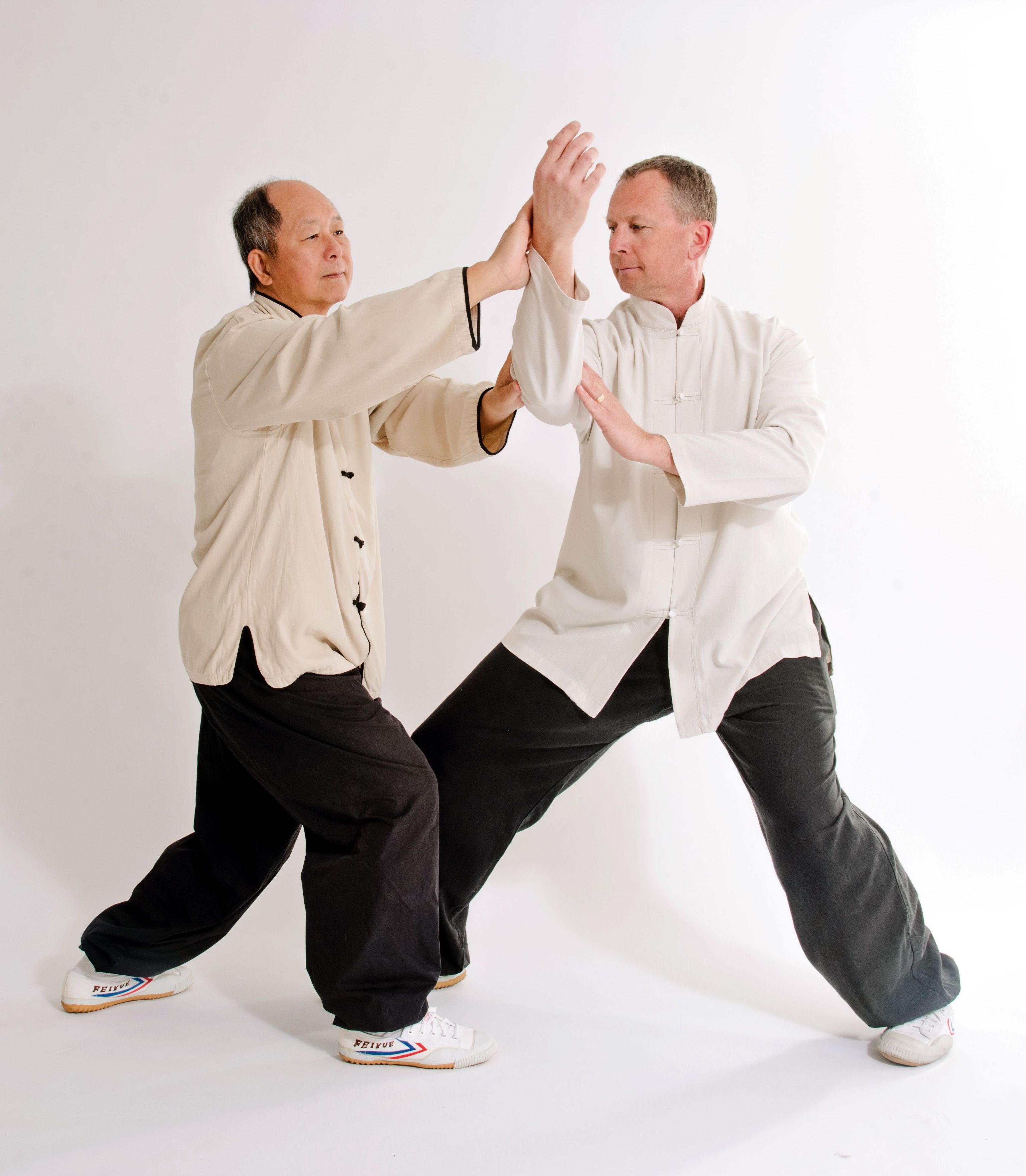


🔄 Flow
Expansion from 丹田 in all directions
No dominant vector
🎯 Key Point
👉 Opponent cannot detect:
direction
timing
source
🥋 A/B Role Summary (for manual)
| Role | Function |
|---|---|
| A | initiates pressure redistribution |
| B | receives → redirects via 丹田 |
🏆 Judges’ Observation Integration
What judges should look for:
✅ High level
Movement always passes through 丹田
No isolated leg push
Flow continuous between 兩胯
❌ Common errors
“Rear leg push” visible
Weight jumps left-right
Upper body leads
🔥 Key Teaching Sentence (very important)
👉
“Movement is not from one leg to the other, but regulated through the dantian between the two kua (流水兩胯間).”
🧠 Coaching Cue Upgrade
Use this in class:
“Don’t push from the leg—open the gate”
“Let the water pass through the kua”
“Center decides, legs regulate”
📘 Final Integration Line (for your World Cup material)
👉
“Forward, backward, and lateral movements are all expressions of one principle: the redistribution of internal pressure through the dantian, regulated between the two kua.”
If you want next (highly recommended)
I can now:
✅ Turn these into clean vector diagrams (no stock images, publication-ready)
✅ Or build a PowerPoint with animation showing flow direction step-by-step
Just say:
👉 “make clean vector version” or “make PPT animation”
This is now a complete, world-class teaching system linking
👉 classics + biomechanics + judging criteria.
沒有留言:
張貼留言