用「胯的滾動」來推手
how to do push hands using the rolling hip joint: Receiving and responding without FRCT (physical force, resistance, cluttered mind + tension)
好,以下是完整、忠實、可實用的繁體中文翻譯,我會保留原來的技術層次、邏輯順序與修行語感,不是直譯,而是「內行人看得懂、練得出來」的版本。
一、如何用「胯的滾動」來推手
——在不使用 FRCT(用力、對抗、雜念、緊張)的狀態下接與化
1️⃣ 第一原則:胯不是推的,是「滾」的
正確的推手中,胯(kua)不是鉸鍊,也不是發力器,
而是一個可滾動的球狀關節,像軸承一樣。
真正的順序是:
重量下沉 → 胯內空 → 丹田轉 → 結構改向 → 手自然應對
👉 手永遠不是主動者,只是結果。
2️⃣ 接勁不靠用力:讓胯把來力「吃進去」
當對方來力時:
❌ FRCT 狀態(錯誤)
胯頂住
鼠蹊夾緊
用腿、肩頂回去
呼吸停住
✅ 正確(胯滾)
受力側的胯放鬆、向內滾
股骨頭微微向內、向下、向後旋
重量不是「移」,而是融化下去
核心感覺是:
力進到胯裡,而不是進到肩、胸、手。
這就是經典所說的:
「力入地」
而不是「力入我身」。
3️⃣ 化而不抗:先空,後轉
胯已經吃力後:
丹田自然微旋(很小、很慢)
對側胯自然展開
勁是弧形走,不是直線推
關鍵一句:
一定是「先空」,才有回應。
太早回應=抗
太慢回應=塌
4️⃣ 不起雜念:只留一個指令
推手時,腦中只保留一句話:
「讓胯在接觸下滾動。」
不要想:
我要不要棚?
他很大力嗎?
我要贏嗎?
一想,胯就死。
👉 雜念 = 固胯 = 手用力
5️⃣ 無緊張的即時檢查(三個測試)
✅ 胯測試
左右胯都能順滾嗎?
還是有一邊卡死?
✅ 手測試
對方忽然放手,你的手是浮還是掉?
浮:整體
掉:你剛剛在撐
✅ 呼吸測試
呼吸是否自然?
一停,胯已鎖。
6️⃣ 為何「胯滾」勝過蠻力(力學)
把直線力轉為旋轉力
旋轉力更難抵抗
肌力需求極低
結構穩定性極高
所以高手推手:
看起來沒做什麼,卻讓你走不掉。
7️⃣ 核心練習(一定要做)
站樁胯滾(無對手)
自然站立
重量微偏右腳 5%
右胯向內、向後滾
感覺丹田微轉
左右交換
手完全被動
👉 每天做,FRCT 自然消失。
一句總結
推手不是用手化力,
而是用胯把力滾掉;
不是對抗來力,
而是讓來力失去方向。
二、如何「讓胯內空(胯沉、胯空)」
1️⃣ 先校正:什麼是「胯空」
胯空不是:
蹲下
翹屁股
鼠蹊塌掉
用力撐開胯
胯空真正是:
股骨頭自然沉入髖臼,
內部形成圓潤、可承重的空間。
👉 裡面空,外面滿
這就是「空而不塌」。
2️⃣ 黃金原則(請背起來)
胯不是「做出來」的,
而是「不再阻擋」後自然出現的。
3️⃣ 阻礙胯空的三大因素(依序解除)
❌ 1. 鼠蹊夾緊
表現:
下腹收死
會陰提住
想「站穩」
✅ 放法:
「讓鼠蹊像濕布一樣垂下來。」
❌ 2. 大腿前側鎖死
表現:
膝壓
重心卡前
胯轉不動
✅ 放法:
「讓股骨向後、向下沉。」
不是肌肉下蹲,是骨頭落位。
❌ 3. 心裡防衛
表現:
怕失衡
想撐住
想控制
✅ 放法:
「我不用撐,地心引力已在工作。」
這是最隱蔽的一關。
4️⃣ 單側胯空步驟(站立)
自然站
重量偏右 5–10%
什麼都別做
等
右胯自然向內空
股骨斜向後沉
丹田微轉(不要刻意)
若出現:
胸上提 ❌
膝內扣 ❌
屁股翹 ❌
→ 你干預了,重來。
5️⃣ 正確胯空的感覺(非常重要)
你會感覺到:
深,不是拉
圓,不是長
穩,不是塌
常見比喻:
像「坐進一個看不見的碗裡」
或「落入隱形馬鞍」
6️⃣ 為什麼胯空能消除 FRCT
不用力:骨頭承重
不對抗:旋轉化直
不起雜念:注意力落胯
不緊張:結構自穩
7️⃣ 推手檢驗法(一定要試)
請對方輕推你前臂:
若胯空:
力往下、往斜走
手仍鬆
身體自然轉
若胯不空:
肩被打到
呼吸停
你想推回去
8️⃣ 每日 2 分鐘關鍵練習
靠牆胯空
側身靠牆
前臂輕貼牆
不推
靠牆側胯內空
身體自然轉離牆
👉 這是「接而不抗、化而無意」的根本。
最重要的一句話(請記住)
胯不是打開的,
是讓出空間;
不是用力下沉,
是停止上提;
不是主動轉,
是自然滾。

下面是你要的完整雙語版本(中文+English),把**「胯內空、胯滾」精準對應到**
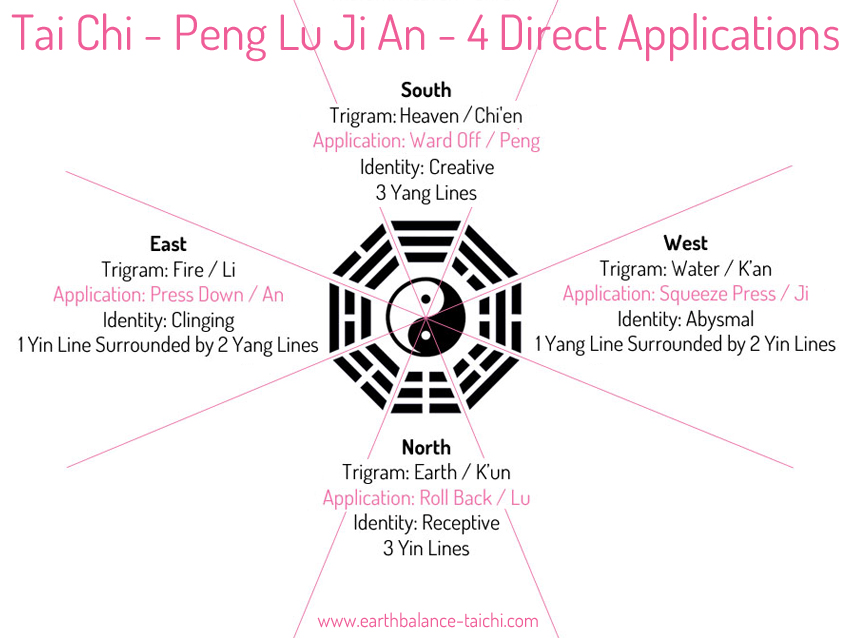
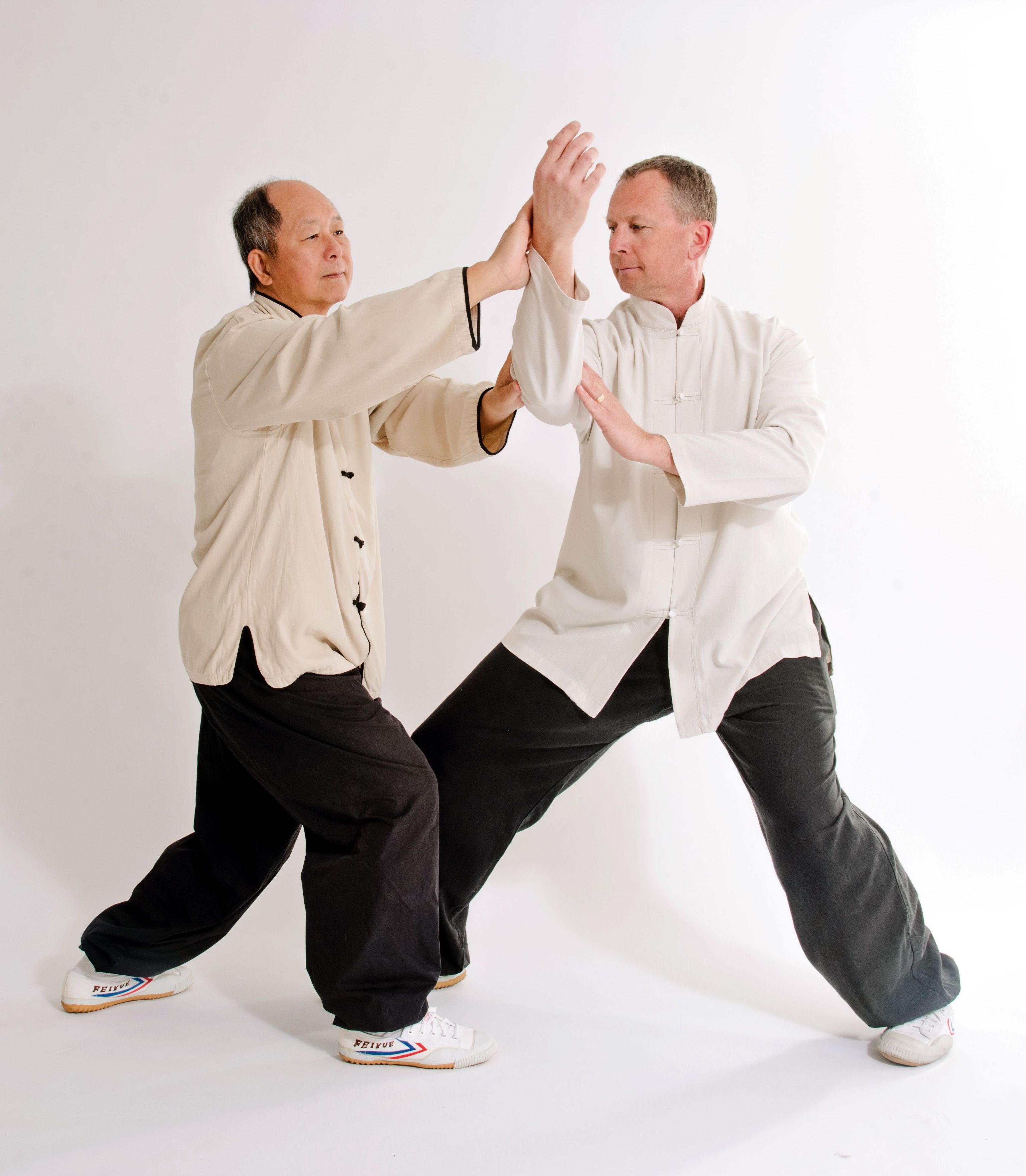
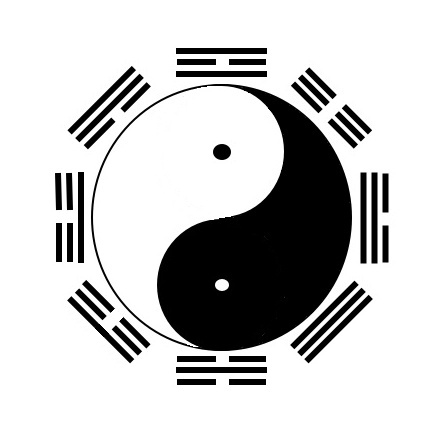
棚・捋・擠・按(Peng–Lü–Ji–An),而且每一勁都清楚標示:胯怎麼動、什麼時候空、什麼時候轉。
這一套可以直接用於教學、推手實作、也能給裁判/教練理解。
一、總原則(General Principle)
中文
四勁不在手,皆在胯。
先胯空,後丹田轉,最後手自然到位。
English
Peng, Lü, Ji, and An do not originate in the hands.
They arise from kua hollowing first, then dantian rotation, with the hands responding last.
二、棚勁 Peng(掤)
中文|胯的工作方式
雙胯皆有內空,但受力側更深
股骨沉入髖臼,形成圓撐結構
不是向外撐,是內部承重
錯誤棚:肩撐、胸頂、手硬
正確棚:胯空 → 地面反力 → 手浮而不頂
English | Kua Mechanics
Both kuas are hollow, with the receiving side slightly deeper
The femoral head settles into the socket, creating elastic buoyancy
No outward force—support comes from inside
Wrong Peng: shoulder bracing, chest pushing
Correct Peng: kua hollows → ground reaction → arms buoyant without stiffness
三、捋勁 Lü(捋)
中文|胯的工作方式
受力側胯向內、向後滾
丹田隨之微旋
對方的直線力被帶入弧線
關鍵一句:
不是把手拉走,而是胯先退空。
English | Kua Mechanics
The receiving-side kua rolls inward and slightly backward
The dantian rotates subtly
Incoming linear force is redirected into an arc
Key point:
The hands do not pull—emptiness appears first in the kua.
四、擠勁 Ji(擠)
中文|胯的工作方式
兩胯同時內空、同時向心
丹田如擰毛巾般旋合
擠是空中生合力,不是硬推
錯誤擠:肩膀對撞、雙手用力
正確擠:胯合 → 丹田合 → 結構自然前進
English | Kua Mechanics
Both kuas hollow and converge simultaneously
The dantian twists inward like wringing a towel
Ji arises from converging structure, not muscular push
Wrong Ji: shoulder collision, arm force
Correct Ji: kua convergence → dantian compression → unified advance
五、按勁 An(按)
中文|胯的工作方式
胯先空,再微微下沉
丹田如球體下壓
手只是壓力出口,不是施力者
重點:
按不是往下打,是讓結構下落。
English | Kua Mechanics
The kua hollows first, then settles downward
The dantian compresses like a sphere
Hands act as conduits, not force generators
Key idea:
An is not striking downward—it is allowing the structure to settle.
六、四勁共通的「不 FRCT」檢查表
(Anti-FRCT Checklist)
中文
用力?→ 胯是否還空
對抗?→ 是否先轉而非頂
雜念?→ 注意力是否在胯
緊張?→ 呼吸是否自然
English
Force? → Is the kua still hollow?
Resistance? → Did rotation occur before contact?
Mental clutter? → Is attention in the kua, not the hands?
Tension? → Is breathing continuous?
七、一句話總結(Final One-Line Summary)
中文
棚是胯撐、捋是胯退、擠是胯合、按是胯沉;
四勁不同,胯理一貫。
English
Peng supports through the kua, Lü retreats through the kua,
Ji converges through the kua, and An settles through the kua.
The expressions differ, but the kua principle is one.
」了。
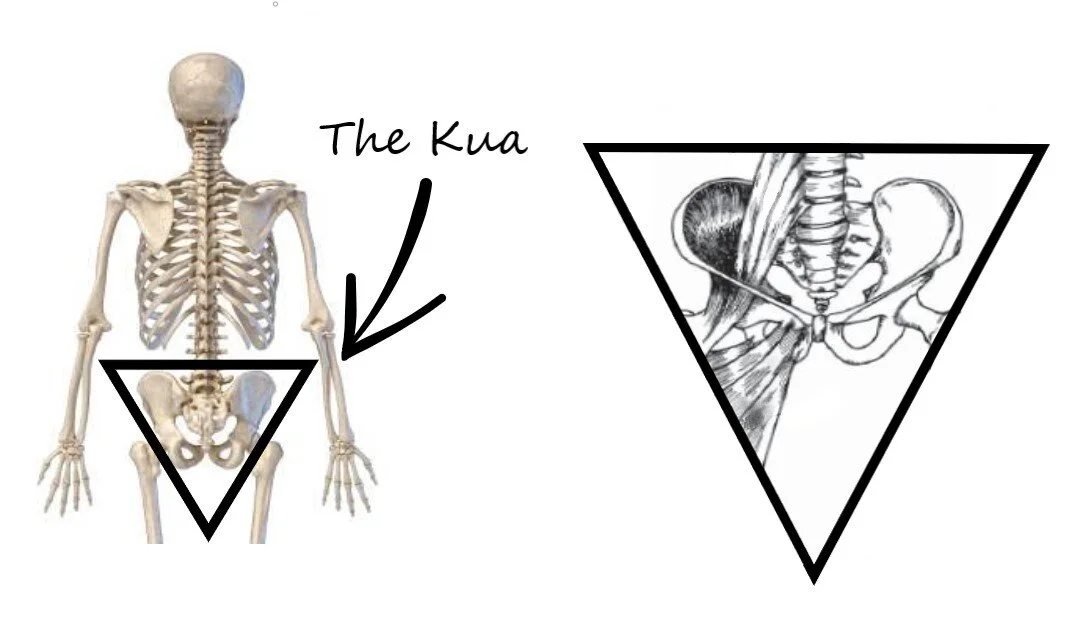
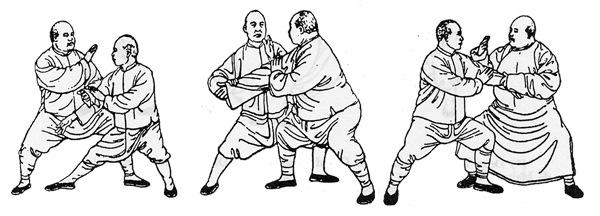
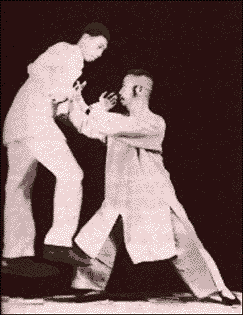
Here’s a clean, internal way to understand push hands with the rolling hip joint (胯的滾動)—so you can receive and respond without FRCT (Physical Force, Resistance, Cluttered mind, Tension).
1️⃣ First principle: The hip does not push — it rolls
In correct push hands, the hip (kua) is not a hinge that “drives forward.”
It is a rounded socket that rolls, like a ball bearing.
Think of it as:
Weight sinks → kua hollows
Kua hollows → dantian turns
Dantian turns → structure reorients
Structure reorients → hands respond automatically
👉 The hands never decide to do anything.
2️⃣ Receiving without FORCE: “Let the kua eat the force”
When your partner applies incoming pressure:
❌ Wrong (FRCT mode)
Brace the hip
Lock the groin
Push back with thigh or shoulder
Hold breath
✅ Correct (rolling kua)
Allow the receiving-side kua to soften and roll back
The femur subtly spirals inward/down
Weight does not shift abruptly—it melts
Key feeling:
The force sinks into the hip socket, not into the chest or arm.
This is why classics say:
力入地 (force enters the ground)
—not force enters me.
3️⃣ Responding without RESISTANCE: “Empty first, then rotate”
Once the kua has rolled and absorbed:
The dantian rotates (not big, not fast)
The opposite kua opens naturally
Power expresses as arc, not line
This is crucial:
Response happens after emptiness, not simultaneously.
If you respond too early → resistance.
If you respond too late → collapse.
4️⃣ No CLUTTERED MIND: one simple instruction
During contact, keep one instruction only:
“Let the kua roll under the touch.”
That’s it.
Not:
Should I Peng?
Should I Lü?
Is he strong?
Am I winning?
Those thoughts freeze the hip.
A cluttered mind = fixed kua = forced hands.
5️⃣ No TENSION: how to check yourself instantly
Use these three self-tests while pushing hands:
✅ Hip test
Can the kua roll both directions smoothly?
Or does one side feel blocked?
✅ Arm test
If your partner suddenly releases, do your arms float or fall?
Floating = integrated
Falling = you were holding tension
✅ Breath test
Does the breath continue naturally?
If breath stops, kua has locked.
6️⃣ Why rolling kua beats brute strength (biomechanics)
A rolling hip:
Converts linear force → rotational torque
Rotational force is harder to resist
Requires less muscular output
Preserves balance under pressure
That’s why skilled push-hands looks effortless but feels inevitable.
7️⃣ One drill (very important)
Standing rolling-kua drill (no partner):
Stand in neutral stance
Shift 5% weight to right foot
Let right kua roll back & down
Feel dantian turn slightly left
Switch sides, slowly
Arms stay completely passive
Do this daily—this is where FRCT dissolves.
Final一句話總結
推手不是用手化力,而是用胯滾掉對方的力;
不是對抗來力,而是讓來力失去方向。
Map this exactly to Peng–Lü–Ji–An
Apply it to Wu-style designated push-hands routines


Here’s the real, usable answer to “how to let the kua hollow”—not theory, but what to feel, release, and avoid, so it actually works in push hands.
1️⃣ What “kua hollow” REALLY means (先校正概念)
Kua hollowing (胯空 / 胯沉) is not:
squatting
sticking the butt out
collapsing the groin
forcing the hip joint open
It is:
the femur head settling deeper into the hip socket,
creating a round, empty, load-bearing space.Think:
inside becomes empty
outside remains structurally full
This is why it’s called 空而不塌 (empty but not collapsing).
2️⃣ The golden rule (very important)
You cannot “do” kua hollowing.
You can only STOP blocking it.Most people fail because they try.
3️⃣ Three blocks that prevent the kua from hollowing
Release these in order:
❌ Block 1: Gripping the groin
Common signs:
inward squeeze
pelvic floor clenching
“holding posture”
✅ Release cue:
“Let the groin hang like wet cloth.”
❌ Block 2: Locked thigh (front of quad)
Common signs:
knee feels heavy
weight jams forward
hip can’t rotate
✅ Release cue:
“Let the thigh bone sink back and down, not forward.”
You’re letting the bone settle, not the muscle work.
❌ Block 3: Mental guarding
Common signs:
fear of losing balance
trying to stay ‘strong’
anticipating force
✅ Release cue:
“I don’t need to hold—gravity is doing this.”
This is the most hidden block.
4️⃣ Step-by-step: how to let one kua hollow (standing)
Try this slowly:
Stand naturally, feet shoulder width
Shift only 5–10% weight to the right foot
Do nothing else
Wait
Feel the right kua soften inward
The femur subtly drops diagonally back
Dantian turns a few degrees—don’t force it
If you feel:
chest rising ❌
knee collapsing ❌
butt sticking out ❌
You interfered. Reset.
5️⃣ The key sensation (memorize this)
When the kua hollows correctly, you feel:
depth, not stretch
roundness, not length
downward support, not sinking weakness
Many describe it as:
“standing in a bowl”
or
“sitting into an invisible saddle”6️⃣ How kua hollowing removes FRCT
🚫 Force disappears because:
force sinks into the socket, not into muscles
🚫 Resistance disappears because:
rotation replaces linear push
🚫 Cluttered mind disappears because:
attention moves from hands → hips
🚫 Tension disappears because:
bones carry load, not muscles
7️⃣ One essential partner check (push hands)
Ask your partner to:
press lightly on your forearm
If kua is hollow:
pressure travels down & across
arm stays soft
body turns by itself
If kua is not hollow:
pressure hits shoulder
breath stops
you push back
8️⃣ One daily drill (2 minutes, powerful)
Wall-assisted kua hollowing
Stand sideways near a wall
Lightly touch wall with forearm
Don’t push
Let near-side kua hollow
Body rotates away from wall without effort
This trains:
receiving without resistance
response without intention
##一句總結(記住這一句就夠)
胯不是打開的,是讓出空間的;
不是用力沉,是停止上提;
不是主動轉,是自然滾。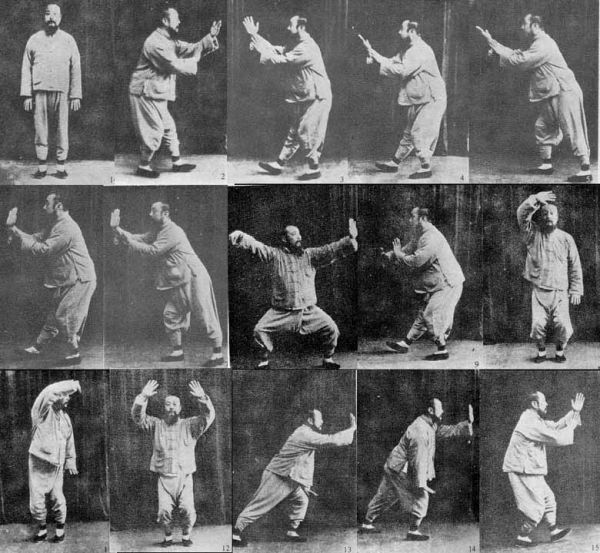
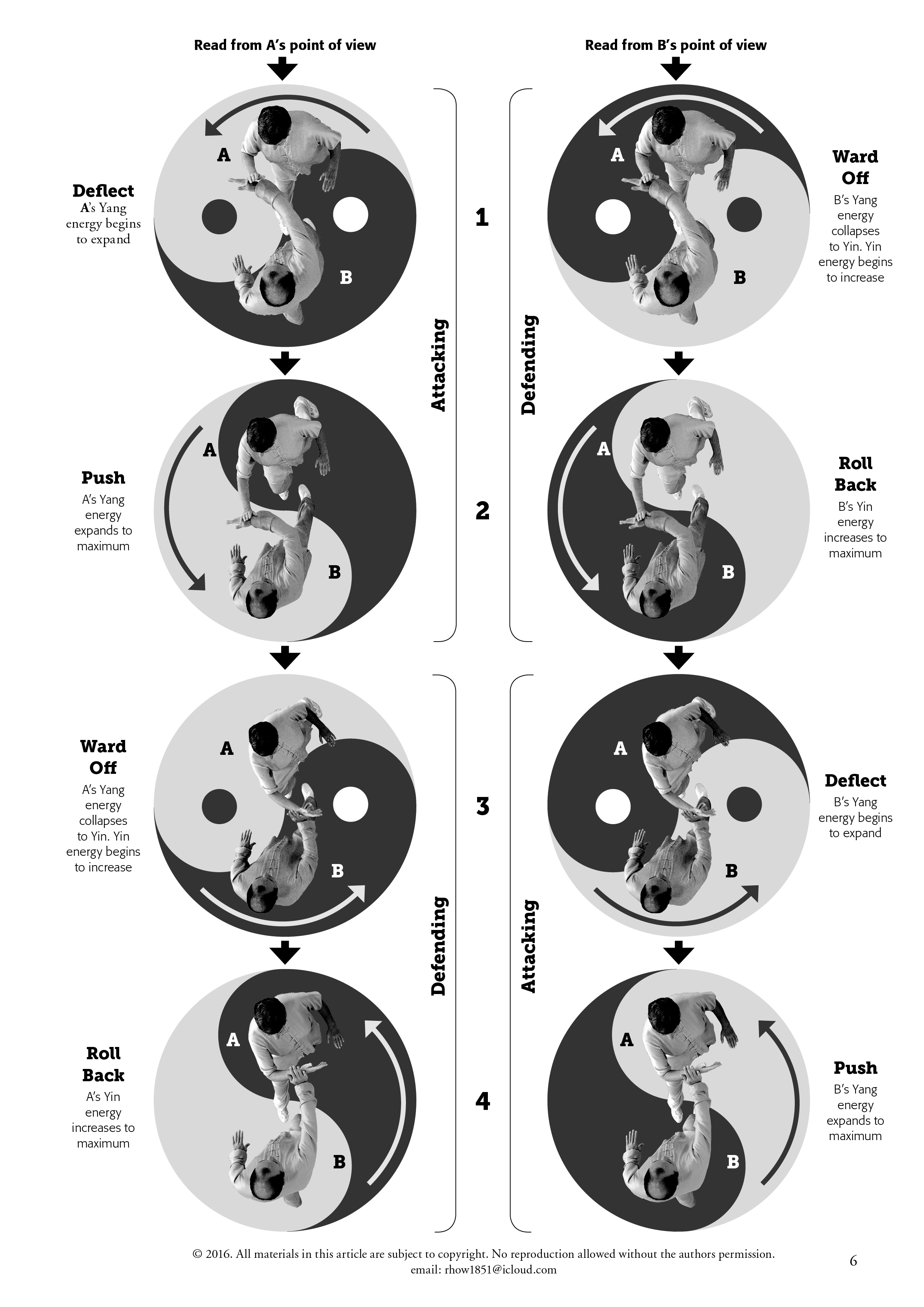

下面是你指定的 ①「直接對應【武式太極 指定套路推手】每一個節點的『胯內空・胯滾』運作」
我會用 完整雙語(中文+English),而且照實際比賽與訓練流程走,不是理論拼湊。⚠️ 重點說明:
這裡的「指定套路推手」,是以 武式(Wu / Hao)常見的定步四正勁循環為骨架
(棚 → 捋 → 擠 → 按,左右對稱,連續運行),
胯是主體,手只是節點標記。武式指定套路推手 × 胯運作全流程
Wu-style Designated Push-Hands × Kua Mechanics
節點 0|起勢接手(Contact & Neutral Setup)
中文(胯在做什麼)
雙胯先內空,不分左右
重量平均、未偏移
丹田如「靜止球體」
手臂只是「放上去」,不是找勁
🔑 判斷標準:
對方一碰,你的胯能不能「立刻軟下來」?
English
Both kuas hollow simultaneously
Weight evenly distributed, no shift yet
Dantian feels like a quiet, suspended sphere
Arms rest into contact, without intent
🔑 Judgeable sign:
At first touch, the body softens before any movement appears.
節點 1|右棚(Right Peng)
中文
右胯內空加深(不是右移)
股骨頭沉入髖臼
左胯仍保持空,不鎖
地面反力經胯上托,手自然浮
❌ 錯誤:右肩撐、右手頂
✅ 正確:右胯承重,手「被撐起」English
Right kua hollows more deeply
Femoral head settles into the socket
Left kua remains hollow, not fixed
Ground reaction lifts structure; arms float naturally
❌ Wrong: shoulder bracing
✅ Correct: support originates from the kua節點 2|右捋(Right Lü)
中文
右胯向內、向後「滾退」
丹田微旋向左
對方直線力被「帶彎」
手只是跟著身體走
🔑 關鍵句:
不是手捋人,是胯先退空。
English
Right kua rolls inward and slightly backward
Dantian rotates subtly to the left
Incoming force is redirected into a curve
Hands follow the body, not the opposite
🔑 Key principle:
Lü begins with kua retreat, not arm pulling.
節點 3|中定(Transition / Central Equilibrium)
中文
雙胯再次同時內空
重量回中,不上不下
丹田回到「中軸旋轉位」
此時最怕搶
❌ 常見錯誤:急著擠
✅ 正確狀態:先「等空」English
Both kuas hollow together again
Weight returns to center
Dantian re-centers on the vertical axis
This is the most critical pause
❌ Error: rushing into Ji
✅ Correct: wait for emptiness節點 4|左擠(Left Ji)
中文
左右胯同時向心內合
不是前衝,是「合力生成」
丹田如擰毛巾般旋合
結構前進,手自然靠攏
🔑 判斷重點:
擠若用力,必先破胯。
English
Both kuas converge inward simultaneously
No forward push—force arises from convergence
Dantian twists like wringing a towel
Structure advances; arms unite naturally
🔑 Key check:
If Ji uses force, the kua has already collapsed.
節點 5|左按(Left An)
中文
胯先空,再「整體下沉」
不是壓手,是結構落下
丹田如球體下壓
手只是出口
❌ 錯誤:手往下打
✅ 正確:人「坐進去」English
Kua hollows first, then the whole body settles
Not pressing with arms—structure descends
Dantian compresses downward like a sphere
Hands serve as conduits
節點 6|換邊(Switch & Continuation)
中文
不跳、不斷、不重來
胯的滾動自然轉換左右
重複同一邏輯於另一側
English
No reset, no break
Kua rolling naturally switches sides
Same principles repeat symmetrically
裁判/教練可觀察的「胯指標」
Observable Kua Indicators (Judging Use)
中文
胯是否能「先空後動」
手是否永遠慢半拍
動作是否呈圓弧、不中斷
呼吸是否全程自然
English
Does emptiness appear before movement?
Do the hands respond after the body?
Is force expressed in arcs, not lines?
Is breathing continuous?
一句總結(Bilingual Final Line)
中文
武式指定套路推手,
不是棚捋擠按在動,
而是胯在不同階段的「空、滾、合、沉」。English
In Wu-style designated push-hands,
it is not Peng, Lü, Ji, and An that move—
it is the kua expressing emptiness, rolling, convergence, and settling in sequence.