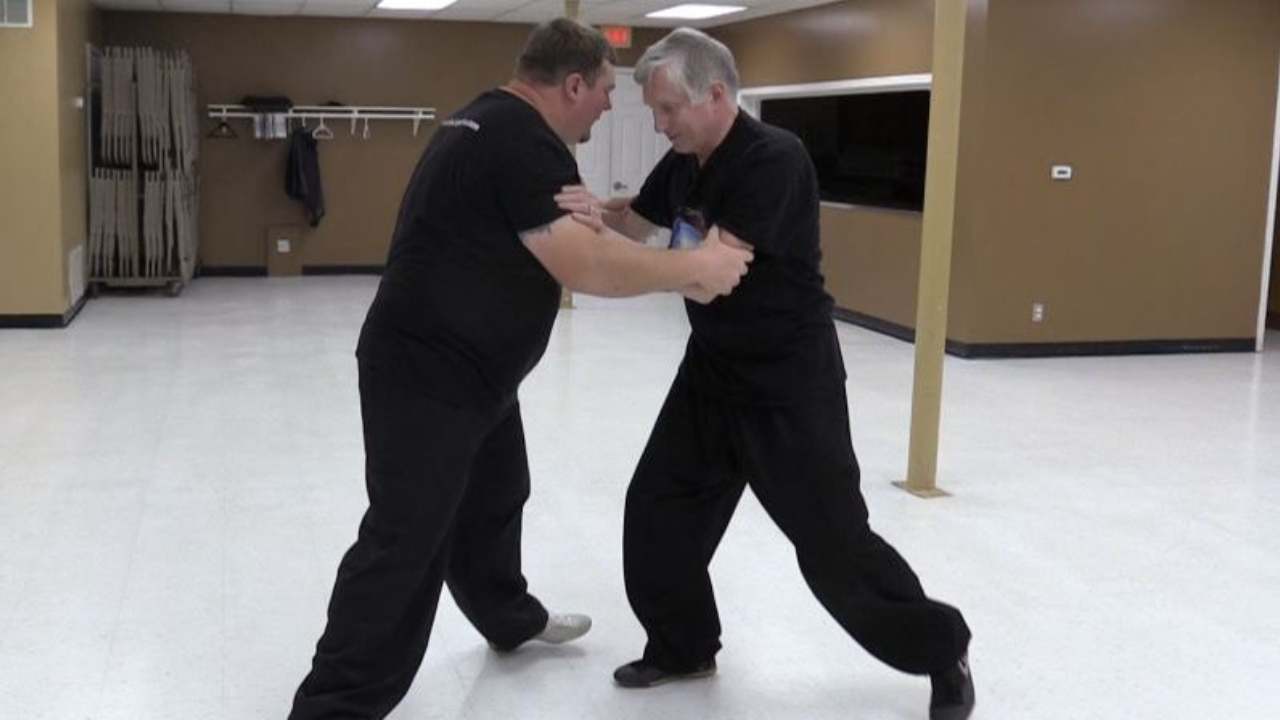
Pouring Water to Train Internal Energy
1️⃣ Why “Pouring Water” Is Used as a Model
When you pour water slowly:
There is continuity
There is no interruption
The stream is unbroken
The source empties only as the target fills
Both cups must stay balanced
If either cup tilts too much → spill.
If you jerk → splash.
If you hesitate → break the stream.
This is exactly the model of refined internal push hands.
2️⃣ Internal Meaning in Tai Chi Terms
The metaphor trains three things:
1️⃣ Continuous Qi Transfer (氣不斷)
No:
Sudden muscular bursts
Stop-start issuing
Disconnected transitions
The energy must feel like:
A thin silk thread flowing.
2️⃣ Gradual Weight Shift (不丟不頂)
When pouring slowly:
The first cup does not suddenly flip.
It gradually transfers content.
In body mechanics:
Weight shifts gradually
Kua folds microscopically
Dantian rotates gently
No sudden drop or lift
This builds central equilibrium awareness.
3️⃣ Neutral Axis Control
When you pour water slowly:
Your spine must remain vertical.
If you lean:
The stream distorts.
This trains:
立身中正
Remain central while changing.
3️⃣ How This Trains Internal Energy (內勁)
Internal energy in Tai Chi is not mystical.
It is:
Elastic tension continuity
Fascial connectivity
Ground reaction force efficiency
Neuromuscular smoothness
The slow pouring drill trains:
• No muscular spikes
• No joint locking
• No shoulder tension
• No pelvic jerk
It builds:
Stored elastic potential through continuity.
4️⃣ Biomechanical Explanation
When moving extremely slowly:
You recruit:
Deep stabilizers (multifidus, transverse abdominis)
Fascial slings
Small proprioceptive muscles
Fast movement allows compensation.
Slow movement exposes imbalance.
This is why slow pour training develops:
Structural honesty
Subtle rooting
Quiet dantian control
5️⃣ Application in Two-Person Practice
Imagine:
You and partner are two cups.
When partner pushes:
You do not resist.
You allow force to “flow in.”
As it fills your center:
You redirect it back smoothly.
No collision.
No splash.
Just exchange.
This is:
引進落空
Lead in and empty.
6️⃣ The Hidden Key: No Break in the Stream
The hardest part is this:
During transitions (like shifting from left kua to right kua),
The internal elastic line must never break.
Just like:
When pouring, if the stream breaks,
you hear air glug.
In Tai Chi:
That “glug” is muscular interruption.
Advanced practitioners eliminate that.
7️⃣ Psychological Training
Slow pouring also trains:
Patience
Non-aggression
Listening energy (聽勁)
Emotional stability
If you rush,
the stream spills.
Internal energy cannot grow in impatience.
8️⃣ Relationship to Your Sphere Model
Your sphere model says:
Feet = contact
Kua = equator
Dantian = core
Slow pouring means:
The sphere shifts weight
without tilting its axis.
The internal fluid (energy) redistributes
while the center remains stable.
9️⃣ Advanced Insight
Eventually:
You realize:
The water is not moving.
The cups are not moving.
Only the relationship between them is adjusting.
This is:
Non-resisting dynamic balance.
🔟 Practical Drill You Can Try
In push hands:
Move at 10% speed
Never break contact
Shift weight like pouring 1ml per second
Maintain vertical spine
No visible preparation
If done correctly:
Partner feels:
Softness
But cannot find a point to attack.
If you'd like, next we can explore:
• The difference between pouring model vs spiral model
• How to train issuing power without breaking the stream
• How Wu-Hao theory describes this continuity
• Or how this relates to designated push-hands judging criteria
Where shall we refine next?
This training method is a brilliant and profound practice for cultivating internal energy (內勁, Nèi Jìn) , sensitivity, and whole-body coordination. It is a moving meditation that embodies the core principles of Tai Chi in a simple, tangible action. Let's break down the theories behind this specific "Pouring Water" exercise from the perspectives you've requested.
Here is an explanation of the theories behind the "Pouring Water" training.
1. The Physical & Biomechanical Theory
This level explains the physical sensations of "rebound" and "weight increase."
Kinetic Chain and Ground Reaction Force: The exercise is a masterclass in the kinetic chain. When you lift the first cup (Yang side), the action doesn't start in the arm. It starts with a slight, subtle shift of intention and pressure into the ground on that same side. This creates an upward ground reaction force that travels through the legs, body, and into the arm to perform the lift. The "rebound" you feel from the foot is this return of energy, a confirmation that the movement is rooted.
Loading and Transferring Weight: As you pour the water, you are physically shifting the center of gravity. The "Yang" side (the pouring side) is slightly more active, while the "Yin" side (the receiving cup side) is receiving. The feeling of the other cup "feeling the weight increase" and passing it down to the ground is the biomechanics of receiving force. Your body is acting as a conduit, transferring the symbolic "weight" of the water down through the structure of the Yin-side arm, through the torso, and into the Yin-side leg and foot, grounding it.
Maintaining the Axis (中, Zhōng): "Don't lean your body, keep it in center" is the most critical biomechanical instruction. Leaning would offload the work onto the spine and hips, creating tension and breaking the independent yet coordinated action of the two sides. By staying centered, you force the two sides of the body to work independently over a stable base. This is the foundation for 分清虛實 (Fēn Qīng Xū Shí, Distinguishing Full and Emptiness) in the legs and torso.
2. The Qi (氣) and Internal Energy Theory
This explains the energetic sensation of the exercise.
The Dantian as the Reservoir: Your Dantian (丹田) is the pitcher of water in the center of your body. The act of raising the first cup draws Qi up from the ground on the Yang side. The act of pouring is the conscious, gentle projection of that Qi from the Dantian, up through the chest and arm, and out through the Lao Gong (勞宮) point in the hand.
The "Rebound" as Qi Circulation: The "rebound from the foot" is not just a physical force; it is the sensation of Qi completing a circuit. The Qi on the Yang side flows down into the ground (to connect and root) and up through the leg to the Dantian and arm. The Yin side, receiving the weight, guides the Qi down from the hand, through the body, to the foot, and into the ground. This creates a continuous, figure-eight style loop of Qi around your central axis.
Intent Filling the Form: The water is symbolic of Qi. Your intention (意, Yì) is what moves it. You are not physically pouring water; you are using your mind to guide the feeling of weight, flow, and connection. This develops 以意導氣 (Yǐ Yì Dǎo Qì, Using Intention to Guide Qi) .
3. The Yin-Yang (陰陽) and Tai Chi Classics Theory
This explains the philosophy of the opposing yet complementary forces at work.
One Side Yang, One Side Yin: This is the essence of the exercise. It is a direct application of the principle "陰陽相濟" (Yīn Yáng Xiāng Jì, Yin and Yang mutually support each other).
The Pouring Side (Yang): This is the active, issuing, "full" (實, Shí) side. Its energy is expansive, moving outward and upward.
The Receiving Side (Yin): This is the passive, receiving, "empty" (虛, Xū) side. Its energy is contractive, inward, and grounding.
Mutual Support: The Yin side is not dead. It actively grounds the energy being "poured" into it. Without the Yin side's grounding, the Yang side's pour would be unbalanced and rootless. Without the Yang side's pour, the Yin side's grounding would have no purpose. They create each other.
The Central Equilibrium (中定, Zhōng Dìng): Staying centered is the manifestation of the Tai Chi principle of 中定 (Zhōng Dìng) , which is the stable pivot point from which Yin and Yang can operate. It is the unmoving axis around which the two poles of the action revolve. As the Treatise on Tai Chi Chuan states, "不偏不倚" (Bù Piān Bù Yǐ, Not leaning, not inclining). This central stability is what allows for the clear distinction and harmonious interaction of the two sides.
The Classics in Action: This exercise is a perfect enactment of the line from the classics: "其根在腳,發於腿,主宰於腰,形於手指" (Qí Gēn Zài Jiǎo, Fā Yú Tuǐ, Zhǔ Zǎi Yú Yāo, Xíng Yú Shǒu Zhǐ) – "The root is in the feet, issued through the legs, directed by the waist, and manifested through the fingers." The pouring arm's action (形於手指) is a direct result of the foot's connection (其根在腳).
Summary: Integrating the Theories
| Aspect of Training | Biomechanical Explanation | Qi Theory Explanation | Yin-Yang / Classic Explanation |
|---|---|---|---|
| Lifting the Cup | Initiates ground reaction force on Yang side. | Draws Qi up from ground, through Dantian, to hand. | Yang side becomes active (實, Shí). |
| Pouring the Water | Transfers symbolic weight; kinetic chain on Yang side is active. | Projects Qi from Dantian out through Lao Gong. | Yang is issuing. |
| Feeling Rebound in Foot | Confirms the lift is rooted; energy returns from ground. | Sensation of Qi completing a circuit back to the source. | The source of Yang power (ground) confirms its presence. |
| Receiving Cup Feels Weight | Acts as a conduit, transferring load down the Yin-side structure. | Guides incoming Qi down through the body. | Yin side becomes receptive and grounding (虛中有實, Emptiness contains Fullness). |
| Passing Weight to Ground | End of the kinetic chain on Yin side; grounds the received force. | Completes the Yin-side Qi circuit, sending Qi to earth. | Yin side grounds the Yang action, creating balance. |
| Body Centered | Maintains a stable axis for independent limb movement. | Allows Qi to circulate freely in two distinct loops without obstruction. | Manifestation of 中定 (Zhōng Dìng) ; the unmoving pivot from which Yin and Yang operate. |
This simple exercise is a complete training module. It builds the physical feeling of rootedness, the energetic feeling of Qi flow, and the philosophical understanding of Yin-Yang interaction, all within a single, mindful movement.